$0.00

Dear Writers: Your non-binary representation sucks
I’ve seen this a million times, so I’m just going to come out and say it:
Stop pretending your alien, celestial, or divine beings are “non-binary representation”. They’re not.
While we’re at it, non-binary is an umbrella term. Whilst agender people are non-binary, not all non-binary people are agender.
The divine unknowable route probably seems safest, right? Gods are quite often seen as or proclaimed to be genderless, as are a range of spirits and other-worldy beings from myth. They’re aloof and mysterious. Perfect for a demographic that can be somewhat controversial to include. And let’s be honest, it’s easier to say “oh the angels of this second world are all non-binary” than to admit you didn’t put any representation into your book initially because you simply didn’t think about it. (Like how a famous Wizard was proclaimed gay after the fact, and outside of the source material.)
Here’s the thing with good representation: It needs to be relatable. The reader needs to be able to see themselves in the character. Your shimmery musical ghosts might be without or beyond gender (agender) but they don’t face any of the challenges that agender people face. They don’t get kicked out of bathrooms, shoehorned into ill-fitting societal roles, cut off from their families, or harassed in the street. They might have their very existence denied, but that’s the limit of their commonality with non-binary people.
Oh but they use singular they as a personal pronoun? Good for them. We’re more than our pronouns.
I don’t know if someone out on the internet has established a standard for non-binary/ trans character rep, and I’m sure I’m not qualified to do so either, but here are four basic rules to either get you started or to assess whether or not you should be marketing your book as enby inclusive:
- The non-binary character(s) have names. They are fully fleshed-out individuals.
- They are human, or a human-equivalent fantasy race.
Imagine your book as a video game – would this be a playable race? No? Then it’s not representation. - If there’s only one non-binary character, they’re NOT androgynous. Quite often cisgendered people expect non-binary people to be easily recognisable as a third gender in the middle of masculine and feminine. While androgyny is a presentation goal for some non-binary people, when I see this in books I know that the writer doesn’t have experience with the non-binary community.
- You showcase queer joy. If you think that being trans is a deeply sad condition where we all hate ourselves and our bodies, and that’s what you choose to portray in your narrative, you need to ask yourself “who is this for?” cause it’s not trans people. Even in a second world where transphobia doesn’t exist, gender euphoria would.
I love that you’re brave enough and educated enough to give my community the representation we’ve been crying out for. Don’t take this as your sign to stop. It’s not too hard, I promise you. Everyone has their own take on “writing the other”, but I personally would prefer imperfect representation to erasure. At this point, I want society to acknowledge that people like me exist. The bar is low. Don’t be afraid to raise it.
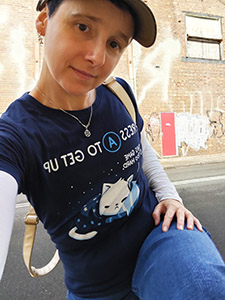
Miriam Cumming is a trans-masculine enby from Sydney Australia. They have been writing for publication for a decade, and have been out as gender-queer for a year. As part of their writing career, Miriam runs a critique group and reads scores of novel drafts, from the heart-shatteringly great to the whitest straightest mediocrity. They want what we all do: Fantastic books.
When they’re not writing, Miriam enjoys playing with stickers, gardening, and practising witchcraft.
Hi