
$0.00


If gender is a social construct, then why change your sex?
Sometimes this is asked in good faith, other times it’s played like a type of “gotcha!” Either way, let’s get into it.
First, it’s important to note that biological sex is a spectrum, not a binary. There’s a range for what is considered normal for a female or male body, and there are also intersex people. Being intersex isn’t some illness that needs to be treated or hidden, it’s a variation seen all over nature. It’s only recently that society has started going “wait a minute, maybe we shouldn’t perform harmful cosmetic genital surgery on these babies to make them fit the binary,” but intersex people have always existed.
It’s also important to note that a lot goes into biological sex. It’s not just your primary sex characteristics (ie, your genitals) or your chromosomes (which you’ll likely never get checked), it’s also your hormones and hormone receptors – and these variables are what makes sex a spectrum.
Basically, our society’s binary gender system isn’t based on true biology, but an over-simplified version.
That aside, while gender roles are a social construct and thus “made up”, so are a lot of the things we cherish in our lives. Marriage is a social construct. Race is a social construct. Beauty. Money. Nationalism. Something being a social construct doesn’t make it less real or give it less impact on our lives.
Now, the same people who ask me “if gender is internal, why change your outside?” or variations thereof, are the same people who say “if you look like a woman, I can’t pretend you’re a man” or “I call people by whatever pronouns they look like.” Funny that. You can’t respect a trans person’s gender unless they “pass”, but also we shouldn’t change our god-given bodies? Almost sounds like you just don’t want trans people to exist.
Let’s pretend for a second they don’t. We wouldn’t need all these hormones and gender affirming surgeries anymore, right?
Wrong. The vast majority of gender affirming care is given to cis gendered people. Do you know any women who have gotten breast implants? Older people on hormone replacement therapy, cause our bodies actually need hormones to function? Women with PCOS on testosterone blockers? Gynecomastia occurs in around 35% of men; and those men, not wanting breasts, often go on medication or have surgery to remove their breast tissue. That’s gender affirming care.
“Normal” people affirm their gender in a variety of other ways too. Gendered clothing and jewellery. Make-up. Shaving. Haircuts. Use of titles.
It doesn’t make a whole lot of sense that people are allowed to push themselves to be more like what society expects of them based on what’s in their pants (keeping in mind that what’s in an intersex person’s pants might have been altered without consent) but it’s weird and freaky if someone wants to use the same tools to look more like what’s in their soul instead.
But transition comes down to two things: comfort and safety.
People like to feel comfortable in their bodies. For some people that means modesty, for others it’s form-fitting skimpy clothes. For some it’s big muscles and others it’s soft curves. Some people are bright and eye-catching and fashion first. Me? I’m comfort and practicality. Different things make each of us comfortable. If you’re a man, and you started growing breasts, you wouldn’t be less of a man – but you might be very uncomfortable. If you’re a woman and you start growing a beard, chances are you’re going to be embarrassed and do whatever it takes to get rid of it.
Now, think for a moment who you style yourself for. Are you dressing to impress your friends or boss? Are you going to the gym because you think your partner will like you better? Are you shaving for society, or because you hate the feeling of stubble? Trans people are doing these things for the same combination of reasons – mostly for themselves, but also, a little because we want our spouses to find us irresistible.
There’s no difference in the actions of a trans and cis person. The differences lie in the starting points (it’s much easier to present femininely if you start out with a female body) and barriers to access (no one is going to throw you out of a women’s clothing store if you look typically feminine).
People need to feel safe. Sometimes we just want to be safe from emotional hurt. Safe from disrespect. It is HARD to open yourself up to your loved ones, tell them your truth, and have them say they don’t believe you. Or they “don’t believe in that” or that your gender doesn’t exist. That your experiences aren’t real. So, yes, some trans people do medically transition in the hopes that people will be able to see with their own eyes what that trans person feels on the inside. We want people to be able to see the truest version of ourselves and to assign us the gender roles that fit who we actually are as people, not our genitals.
For others, safety is less emotional and more physical. Trans women, especially Black trans women, are the victims of frequent harassment, violence, and yes, murder. It’s not safe to be visibly trans in a good portion of the world. Being able to “pass” or “be stealth” is important simply for survival.
In answer to the original question, no, we don’t have to change our sex. We don’t have to medically transition, and many trans people don’t. Some can’t afford to, some aren’t safe to do so, and others just don’t want to. There’s no one way to be trans.
Someone asked me once if I thought being trans was a mental illness and I said to them that if it was, wouldn’t we give them whatever they needed to live their best lives and contribute to society however they could? There are lots of mental illnesses and ways of being neurodivergent that can’t (and shouldn’t be) cured – does that mean we should make those people suffer needlessly? No.
Of course, being trans is not a mental illness. Or any other kind of illness. And it’s proven that access to gender-affirming care has the best outcomes for trans patients. Allowing trans people to transition literally saves their lives. Which, honestly, is why some people are against it: they don’t want trans people to exist. Simple as that.
Whilst I hope my words bring a greater level of understanding to my readers, I also want to note that you don’t have to understand people to respect them. You can be happy for people even if they follow a different path to your own. If you’ve gotten this far and you still think gender-affirming care (for both cis and trans people) is wrong, cool. Just don’t get any. I’ll defend your right to make that choice for yourself.
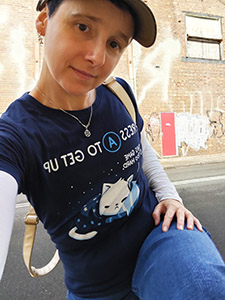
Miriam Cumming is an author, parent, spouse, and practising witch. Their blogs reflect their lived experiences and unfiltered thoughts. If you know someone who would benefit from reading this post, please share it with them.